The Signal, Not the Store
This week I attended the grand opening of a premium health and wellness club in Markham, the first of its kind in the Greater Toronto Area, built by a local physician. The space is genuinely impressive: concierge family medicine, an on-site lab and pharmacy, a full fitness centre, hydrotherapy, recovery. You can read the full account of the opening in Regional Councillor Alan Ho’s write-up.
The building held my attention for about a minute. What kept it was the behaviour underneath.
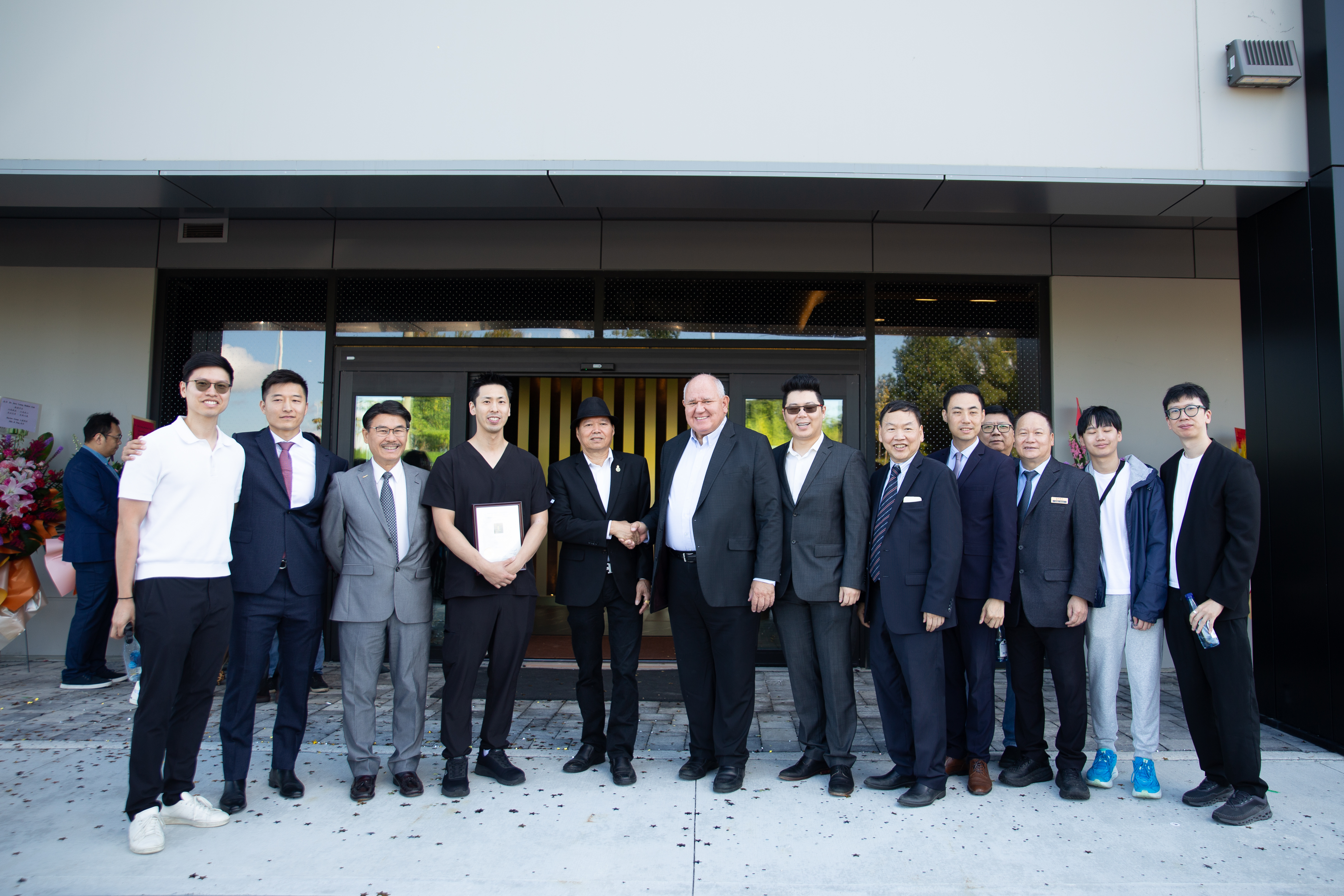
People were not lining up for a gym. They were signalling a change in standard: a demand for health that begins before illness, oriented toward prevention and longevity rather than repair. When a market of that kind appears in a suburb, it is worth reading as a leading indicator, not a lifestyle trend.
Why an Innovator Watches This
I map five domains in my work, and one of them asks a plain question: how do we keep the individual and systemic processes going, indefinitely. Preventive medicine sits at the centre of that question.
Longevity is not a vanity metric. It is the substrate on which contribution compounds. A researcher, a founder, a builder who stays sharp and healthy for four productive decades returns far more than one who burns out in one. Health span is the horizon over which every other ambition gets to accumulate.
So a community raising its health standard is doing something structural. It is extending the window in which its people can build. Markham deciding that this belongs here, close to home, is a small vote for a longer time horizon.
From a Clinic to a Country
The second reason I was there had nothing to do with the club.

I spent time with Mayor Frank Scarpitti talking about the future of innovation in Canada, and about how a city like Markham can lead the charge toward an economically powerful and sovereign country. That conversation and this opening are the same story told at two scales.
I have argued elsewhere that Canada produces world-class research and talent, then loses the value of both through five structural gaps: weak commercialization, talent that leaves, IP that ends up owned abroad, a fragmented national effort, and a shortage of patient capital. I laid that case out in Canada’s Innovation Paradox.
A local physician choosing to build something ambitious in Markham, rather than exporting the idea or the capital elsewhere, is a direct answer to that paradox. It keeps the investment, the jobs, and the attention at home. One club will not close a national gap. A hundred decisions like it, made locally and backed patiently, is exactly what closing the gap looks like.
What It Takes to Compound
A single ambitious build is a data point. An ecosystem is the goal.
The distance between the two is measured in whether the next builder sees this one and decides Markham is a place where ambition gets rewarded rather than absorbed. Cities lead innovation less by strategy documents and more by accumulating proof that building here works.
Credit to Dr. Leung for supplying the proof. The harder work belongs to the rest of us: to notice these signals, back them, and make enough of them that keeping what we create at home stops being the exception.
That is the future worth building toward, and Markham is a reasonable place to start.